Situation
TIMI was a 4.5-month interaction design project (CS3240) at NUS. I identified that smartphone travel apps force heads-down interaction that detracts from the travel experience, and saw a perfect use case for wearable heads-up devices given their hands-free interaction, contextual awareness, and wearable nature. I proposed what became the course's first ever heads-up wearable AR interaction design project.
TIMI was a 4.5-month project for CS3240 (Interaction Design) at NUS. The course was traditionally focused on web-based and smartphone-based interaction design — no team in its history had ever proposed a heads-up, wearable AR interaction design project.
Smartphone-based travel apps are widely used by travellers, but their heads-down interaction model constantly pulls attention away from the experience of being somewhere new. I identified this as a meaningful design problem — and saw a perfect use case for wearable heads-up devices, given their hands-free interaction, contextual awareness, and wearable nature. I proposed what became the course's first ever heads-up wearable AR interaction design project.
Task
I independently proposed the project scope, recruited three teammates based on their complementary backgrounds, and led the design of TIMI — a heads-up, context-aware multimodal travel assistant for AR glasses covering four travel tasks: information retrieval, note-taking, photo-taking, and navigation.
My responsibility was to independently propose the project scope, recruit teammates, lead the product vision, and drive the design of TIMI — a heads-up, context-aware multimodal travel assistant for AR glasses that enhances user experience across four key travel tasks:
- 01Information retrieval — e.g. looking up an unknown animal species encountered while travelling
- 02Note-taking — e.g. recording interesting observations about a museum artifact
- 03Photo-taking — e.g. capturing a beautiful photo of nature hands-free
- 04Navigation — e.g. finding your way from your hotel to a tourist location
In addition to design leadership, I coordinated research, delegated deliverables across the team, and conducted usability evaluation using mixed methods including eye-tracking.
Actions
I strategically recruited teammates by analysing their pitches for skill fit, led interaction design for the information retrieval task, and coordinated weekly meetings to align design language across all four tasks. Despite having zero prior Figma experience, I learned the tool on the job alongside our interaction designer while applying my HCI knowledge to guide design decisions. I also co-designed a Wizard of Oz evaluation using Figma, Google Meet, and Pupil Labs eye-tracking, assessed through semi-structured interviews, NASA TLX, and SUS questionnaires.
Defined the project scope and led product vision
- Independently proposed the AR glasses project direction to the course instructor, framing it around the observation that desktop and mobile UI/UX has reached near saturation and wearable UX is the next design frontier
- Recruited three teammates willing to work outside the course's conventional project templates
- Led product vision, defined design principles, and delegated workstreams across the team throughout the semester
Designed the multimodal interaction system
- Broke down the interaction design task by assigning one team member to each of the four tasks, and personally led the interaction design for the information retrieval task
- Coordinated weekly team meetings to align design language across all four tasks — particularly between information retrieval and note-taking, which share similar interaction patterns
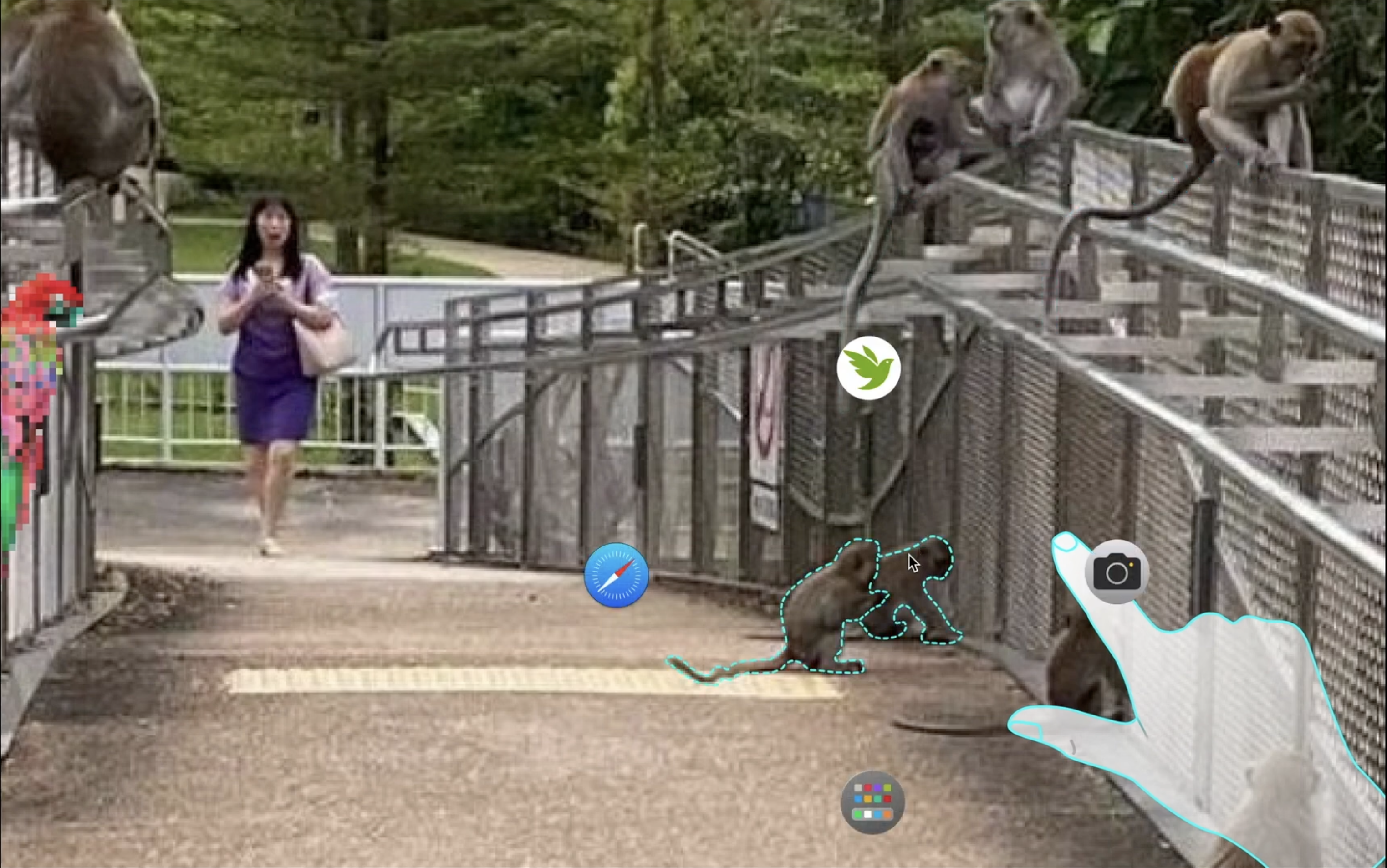
TIMI multimodal interaction design for AR glasses
Conducted mixed-method usability evaluation
- Designed a Wizard of Oz evaluation system using Figma, Google Meet, and the Pupil Labs eye tracker — enabling realistic simulation of the AR interaction experience without a functional prototype
- Applied mixed methods to identify usability issues: semi-structured interviews, NASA TLX workload questionnaire, and SUS (System Usability Scale) questionnaire
- Iteratively refined the design based on findings from the evaluation for the final submission
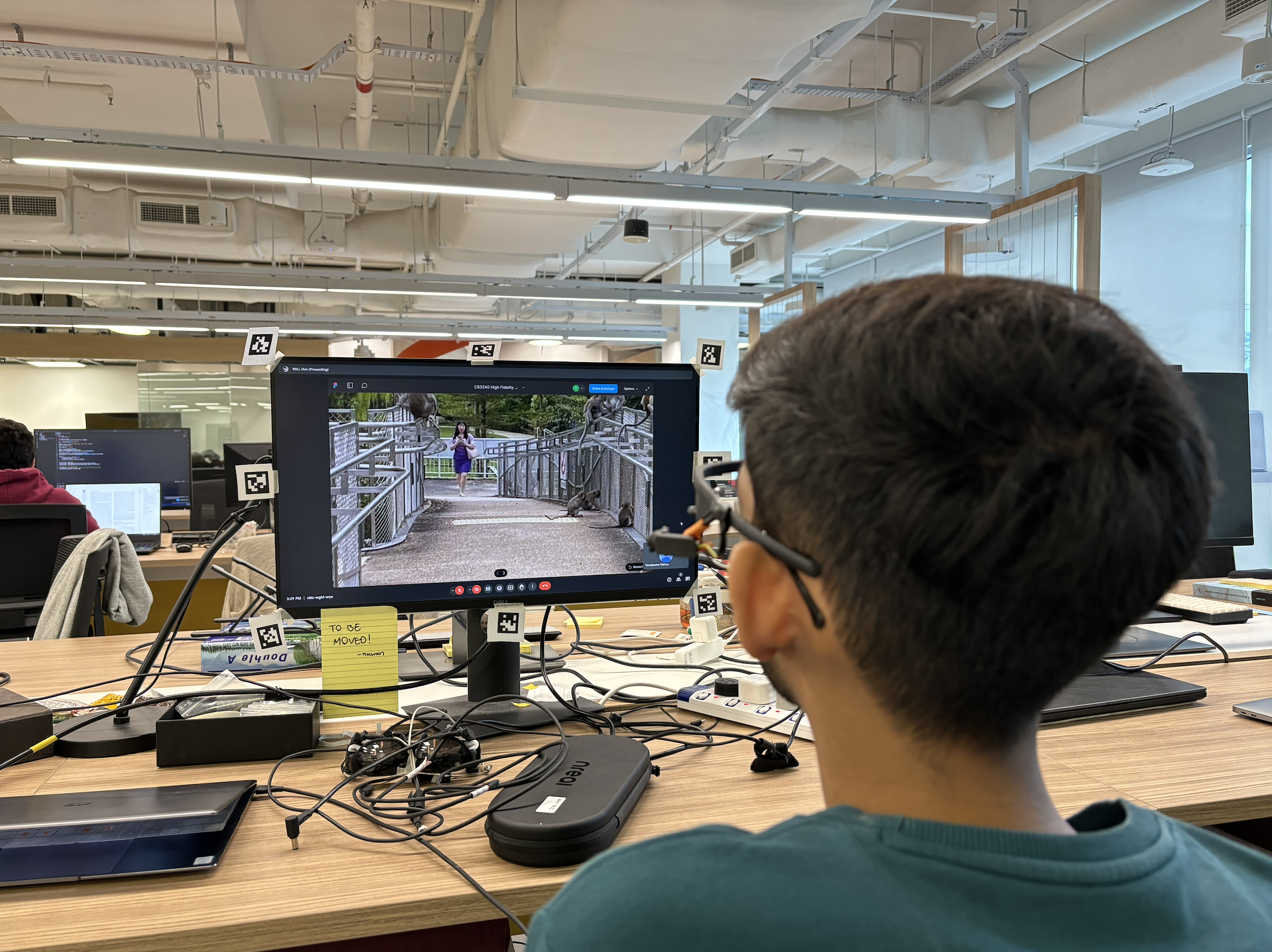
Wizard of Oz usability evaluation session
Results
TIMI became the first AR smartglasses interaction design portfolio in CS3240's course history. The team achieved full marks on all three project milestones, and all four members received a minimum A grade.
- TIMI was the first AR smartglasses interaction design portfolio in the entire course history of CS3240 at NUS
- Achieved full marks on all three major project milestones in the course
- All four team members achieved a minimum of an A grade for the course
- Delivered a high-fidelity Figma prototype and usability evaluation report for a heads-up multimodal AR travel assistant covering information retrieval, note-taking, photo-taking, and navigation
Key Takeaways
TIMI sharpened my ability to identify emerging design opportunities, lead teams through ambiguous self-directed work, learn new tools on the job, and evaluate non-standard interfaces with mixed methods.
Through this project, I strengthened my ability to:
- Identify and frame novel design opportunities in emerging technology spaces before they become mainstream
- Lead a team through ambiguous, self-directed design work with no existing precedent to follow
- Apply mixed-method evaluation — combining eye-tracking with qualitative methods — to validate interaction design decisions for non-standard interfaces